
24 Jul

Why a 3-Year Fixed Mortgage Still Makes Sense

General

Posted by: Cedric Pelletier


Key Takeaways

  • Lower inflation doesn’t automatically make variable rates the better choice.
  • Today’s mortgage pricing still favours many fixed-rate options.
  • A 3-year fixed offers a strong balance of stability and flexibility.
  • The best mortgage depends on your financial situation—not rate forecasts.

Lower Inflation Doesn’t Change Everything

With inflation easing, many Canadians expect variable mortgages to become the obvious choice.

Not so fast.

Mortgage rates are priced based on what financial markets expect to happen—not just today’s inflation. Much of the anticipated movement in Bank of Canada rates is already reflected in current mortgage pricing.

Why the 3-Year Fixed Stands Out

For many borrowers, a 3-year fixed mortgage continues to hit the sweet spot by offering:

  • Predictable payments
  • Competitive rates
  • Flexibility to renew sooner if rates decline

The cost of locking in certainty is currently smaller than many people think.

Variable Mortgages Still Have a Role

A variable mortgage can still be a good fit if you:

  • Have a stable income
  • Can comfortably handle payment changes
  • Want maximum flexibility
  • Expect to sell or refinance before your term ends

Choosing a mortgage isn’t about predicting rates perfectly—it’s about choosing the option that best fits your financial goals.

The Bottom Line

Despite lower inflation, a 3-year fixed mortgage remains one of the strongest values in today’s market. It offers stability without giving up much in potential savings, making it a smart option for many Canadians renewing or buying a home.


FAQ

Does lower inflation mean variable mortgages are better?

Not necessarily. Current mortgage rates already reflect market expectations for future Bank of Canada decisions.

Why are 3-year fixed mortgages popular right now?

They provide payment certainty while allowing borrowers to renew sooner if rates move lower.

Who should consider a variable mortgage?

Borrowers with stable finances, lower debt, and a higher tolerance for changing interest rates.

Cedric Pelletier
Mortgage Associate – Maximal Mortgages

14 Jul

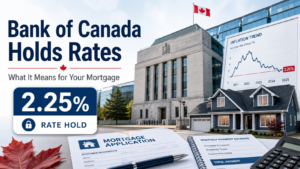
Bank of Canada Holds Rates: What It Means for Your Mortgage

General

Posted by: Cedric Pelletier


Bank of Canada Holds Rates: What It Means for Your Mortgage

The Bank of Canada is widely expected to keep its policy rate at 2.25%, marking a sixth straight rate hold. While that decision may not surprise markets, the Bank’s outlook could provide important clues about where interest rates are headed next.

For homeowners and buyers, the focus is shifting from “Will rates be cut?” to “When could rates start rising again?”

Key Takeaways

  • The Bank of Canada is expected to keep its policy rate at 2.25%.
  • Inflation has risen above 3%, increasing pressure for future rate hikes.
  • Canada’s economy is showing signs of recovery after a slow start to 2026.
  • Some economists expect rate hikes later this year, while others don’t see increases until 2027.

Why Is the Bank Holding Rates?

The Bank continues to balance inflation with economic growth. While inflation remains above target, there is still enough slack in the economy to justify waiting before raising rates.

This gives policymakers time to determine whether higher inflation is temporary or becoming more widespread.

Inflation Is Back in Focus

Higher energy costs have pushed inflation above 3%, but the Bank will be watching for signs that rising prices are spreading into wages and everyday goods.

If inflation stays elevated, interest rate hikes become more likely.

What Are Canada’s Big Banks Predicting?

Economists agree a rate hold is likely this week, but opinions differ on what comes next.

  • Scotiabank: Expects rate hikes beginning in late 2026.
  • RBC, CIBC & National Bank: Forecast hikes in 2027.
  • BMO & TD: Expect rates to remain unchanged through 2027.

The timing will depend on future inflation and economic data.

What This Means for Mortgage Borrowers

A rate hold doesn’t guarantee lower mortgage rates ahead. Fixed mortgage rates are influenced by market expectations, and lenders may adjust pricing if investors expect future Bank of Canada hikes.

If you’re buying a home or renewing your mortgage, it’s a good time to review your options and plan for different rate scenarios rather than waiting for rates to fall further.

Bottom Line

The Bank of Canada is expected to leave rates unchanged, but its messaging may be more important than the decision itself. With inflation remaining above target and economic growth improving, future rate hikes are becoming part of the conversation again.

For borrowers, staying informed and planning ahead is the best way to navigate an uncertain rate environment.


FAQ

Will the Bank of Canada raise rates this week?

Most economists expect the Bank to hold its policy rate at 2.25%.

Why are rate hikes being discussed?

Inflation has climbed above the Bank’s 2% target, raising concerns that higher interest rates may be needed if price pressures persist.

Should I lock in my mortgage?

That depends on your financial goals and risk tolerance. Speaking with a mortgage professional can help you decide whether a fixed or variable rate is the better fit.

2 Jul

Canada’s Economy Rebounds—Will Mortgage Rates Stay Higher?

General

Posted by: Cedric Pelletier


Canada’s economy grew 0.5% in April, beating expectations and marking its strongest monthly gain since last summer. While that’s positive news for the economy, it may also keep pressure on fixed mortgage rates.

Key Takeaways

  • Canada’s GDP rose 0.5% in April, above forecasts.
  • Growth was led by oil and gas, mining, and construction.
  • The 5-year Government of Canada bond yield climbed back above 3%.
  • Strong U.S. job openings also pushed bond yields higher.
  • Markets now see a roughly 50/50 chance of another Bank of Canada rate hike by year-end.

Why It Matters

Fixed mortgage rates are largely driven by Government of Canada bond yields. As stronger economic data pushes yields higher, lenders have less room to lower fixed mortgage rates.

While Canada’s economy is showing resilience, challenges remain, including trade uncertainty, tariffs, and slower population growth. Even so, stronger-than-expected GDP has reinforced expectations that interest rates could stay higher for longer.

What Homebuyers Should Know

If you’re shopping for a mortgage or renewing this year, don’t expect fixed rates to fall quickly unless bond yields move lower. Economic data over the coming months—especially inflation and employment—will continue to shape where rates go next.

FAQ

Why did bond yields rise?
Stronger Canadian GDP and better-than-expected U.S. job openings increased expectations that interest rates could remain elevated.

Does this mean mortgage rates will rise?
Not necessarily, but higher bond yields typically reduce the likelihood of lower fixed mortgage rates in the near term.


Cedric Pelletier – Mortgage Associate
Maximal Mortgages