
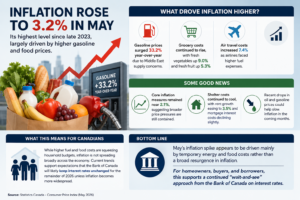
Key Takeaway: Inflation rose to 3.2% in May, its highest level since late 2023, largely driven by higher gasoline and food prices. However, underlying inflation remains relatively stable, reducing pressure on the Bank of Canada to raise interest rates.
What Drove Inflation Higher?
- Gasoline prices surged 33.2% year-over-year due to Middle East supply concerns.
- Grocery costs continued to rise, with fresh vegetables up 9.0% and fresh fruit up 5.3%.
- Air travel costs increased 7.4% as airlines faced higher fuel expenses.
Some Good News
- Core inflation measures remained near 2.1%, suggesting broader price pressures are still contained.
- Shelter costs continued to cool, with rent growth easing to 3.5% and mortgage interest costs declining slightly.
- Recent drops in oil and gasoline prices could help slow inflation in the coming months.
What This Means for Canadians
While higher fuel and food costs are squeezing household budgets, inflation is not spreading broadly across the economy. Current trends support expectations that the Bank of Canada will likely keep interest rates unchanged for the remainder of 2026 unless inflation becomes more widespread.
Bottom Line: May’s inflation spike appears to be driven mainly by temporary energy and food costs rather than a broad resurgence in inflation. For homeowners, buyers, and borrowers, this supports a continued “wait-and-see” approach from the Bank of Canada on interest rates.

Cedric Pelletier – Mortgage Associate
Maximal Mortgages