
Key Takeaways
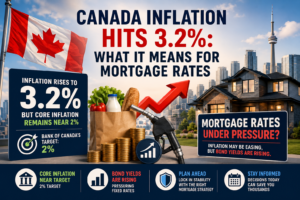
- Headline inflation increased to 3.2%, mainly due to higher energy prices.
- Core inflation remains close to the Bank of Canada’s 2% target.
- Most economists believe this spike is temporary.
- Mortgage rates could still face upward pressure from rising U.S. bond yields.
Why This Matters
Canada’s inflation climbed to 3.2% in May, but the increase was largely driven by a temporary jump in gas prices. The Bank of Canada pays closer attention to core inflation, which remained near 2%, suggesting underlying inflation is still under control.
While this supports keeping the overnight rate unchanged, fixed mortgage rates depend on bond yields—and those continue to rise despite softer inflation data.
What Could Push Rates Higher?
Markets are looking beyond inflation. Rising U.S. government bond yields, ongoing fiscal concerns, trade uncertainty, and continued AI-driven investment are all putting upward pressure on longer-term interest rates.
What Borrowers Should Consider
If you’re buying a home or renewing your mortgage, don’t assume lower inflation automatically means lower mortgage rates. Fixed rates could remain elevated even if the Bank of Canada stays on hold.
For borrowers seeking certainty, a 3-year fixed or hybrid mortgage may provide a balanced approach while economic uncertainty continues.
FAQs
Will the Bank of Canada cut rates soon?
Most economists expect the Bank to keep rates steady unless core inflation rises meaningfully.
Why are fixed mortgage rates still high?
Fixed rates are driven by bond yields, which are being influenced by global economic factors—not just Canadian inflation.

Cedric Pelletier – Mortgage Associate
Maximal Mortgages